Germany
| Conventional Long Name | Federal Republic of Germany |
| Common Name | Germany |
| Native Name | «Bundesrepublik Deutschland» |
| Image Flag |  |
| Image Coat |  |
| Coa Size | 70 |
| National Anthem | «"Das Lied der Deutschen"» The Song of the Germans |
| Image Map | .svg)  |
| Capital | Berlin |
| Coordinates | 52°31′N, 13°23′E |
| Largest City | capital |
| Official Languages | German |
| Demonym | German |
| Government Type | Federal parliamentary republic |
| Leader Title1 | President |
| Leader Name1 | Frank-Walter Steinmeier |
| Leader Title2 | Chancellor |
| Leader Name2 | Friedrich Merz |
| Legislature | Bundestag ⋅ Bundesrat |
| Area Km2 | 357,022 |
| Area Rank | 63rd |
| Area Sq Mi | 137,847 |
| Percent Water | 1.27 |
| Population Estimate | 83,491,249 |
| Population Estimate Year | Q2 2025 |
| Population Census | 82,719,540 |
| Population Census Year | 2022 |
| Population Census Rank | 19th |
| Population Density Rank | 63rd |
| Gdp Ppp | $6.154 trillion |
| Gdp Ppp Rank | 6th |
| Gdp Ppp Year | 2025 |
| Gdp Ppp Per Capita | $73,553 |
| Gdp Ppp Per Capita Rank | 23rd |
| Gdp Nominal | $5.014 trillion |
| Gdp Nominal Rank | 3rd |
| Gdp Nominal Year | 2025 |
| Gdp Nominal Per Capita | $59,925 |
| Gdp Nominal Per Capita Rank | 19th |
| Gini | 29.4 |
| Gini Year | 2023 |
| Gini Change | increase |
| Hdi | 0.959 |
| Hdi Rank | 5th |
| Hdi Year | 2023 |
| Hdi Change | increase |
| Currency | Euro (€) |
| Currency Code | EUR |
| Time Zone | CET |
| Utc Offset | +1 |
| Utc Offset Dst | +2 |
| Time Zone Dst | CEST |
| Cctld | .de |
| Calling Code | Telephone numbers in Germany|+49 |
| Date Format | Day, month, year ⋅ Year, month, day |
Germany, officially the Federal Republic of Germany, is a country in Western and Central Europe. It lies between the Baltic Sea and the North Sea to the north with the Alps to the south. Its sixteen constituent states have a total population of over 82 million, making it the most populous member state of the European Union. Germany borders Denmark to the north; Poland and the Czech Republic to the east; Austria and Switzerland to the south; and France, Luxembourg, Belgium, and the Netherlands to the west. The nation's capital and most populous city is Berlin and its main financial centre is Frankfurt; the largest urban area is the Ruhr.
Settlement in the territory of modern Germany began in the Lower Paleolithic, with various tribes inhabiting it from the Neolithic onward, chiefly the Celts, and Germanic tribes inhabiting the north. Romans named the area Germania. In 962, the Kingdom of Germany formed the bulk of the Holy Roman Empire. During the 16th century, northern German regions became the centre of the Protestant Reformation. Following the Napoleonic Wars and the dissolution of the Holy Roman Empire in 1806, the German Confederation was formed in 1815.
Unification of Germany into the modern nation-state, led by Prussia, established the German Empire in 1871. After World War I and a revolution, the Empire was replaced by the Weimar Republic. The Nazi rise to power in 1933 led to the establishment of a totalitarian dictatorship, World War II, and the Holocaust. In 1949, after the war and Allied occupation, Germany was organised into two separate polities with limited sovereignty: the Federal Republic of Germany (FRG), or West Germany, and the German Democratic Republic (GDR), or East Germany. The FRG was a founding member of the European Economic Community, while the GDR was a communist Eastern Bloc state and a founding member of the Warsaw Pact. After the fall of the communist led-government in East Germany, German reunification saw the former East German states join the FRG on 3 October 1990.
Germany is a developed country with a strong economy; it has the largest economy in Europe by nominal GDP. As a major force in several industrial, scientific and technological sectors, Germany is both the world's third-largest exporter and third-largest importer. Widely considered a great power, Germany is part of multiple international organisations and forums. It has the third-highest number of UNESCO World Heritage Sites: 55, of which 52 are cultural.
Etymology
Names of Germany
The English word Germany derives from the Latin «Germania», which came into use after Julius Caesar adopted it for the peoples east of the Rhine. The German term «Deutschland», originally «diutisciu land» ('the German lands'), is derived from (cf. Dutch), which descended from Old High German «diutisc» 'of the people' (from «diot» or «diota» 'people'), originally used to distinguish the language of the common people from Latin and its Romance descendants. This in turn descends from Proto-Germanic «þiudiskaz» 'of the people' (see also the Latinised form «Theodiscus»), derived from «þeudō», descended from Proto-Indo-European «tewtéh₂-» 'people', from which the word Teutons also originates.
History
Prehistory
Linear Pottery culture
Ancient humans were present in Germany at least 600,000 years ago. The first non-modern human fossil (the Neanderthal) was discovered in the Neander Valley. Similarly dated evidence of modern humans has been found in the Swabian Jura, including 42,000-year-old flutes which are the oldest musical instruments ever found, the 40,000-year-old Lion Man, and the 41,000-year-old Venus of Hohle Fels.
Germanic tribes, Roman frontier and the Frankish Empire
Jastorf culture
The Germanic peoples are thought to have emerged from the Jastorf culture during the Nordic Bronze Age or early Iron Age. From southern Scandinavia and northern Germany, they expanded south, east, and west, coming into contact with the Celtic, Iranian, Baltic, and Slavic tribes. Southern Germany was inhabited by Celtic-speaking peoples, who belonged to the wider La Tène culture. They were later assimilated by the Germanic conquerors.
Under Augustus, the Roman Empire began to invade lands inhabited by the Germanic tribes, creating a short-lived Roman province of Germania between the Rhine and Elbe rivers. In 9 AD, three Roman legions were defeated by Arminius in the Battle of the Teutoburg Forest. The outcome of this battle dissuaded the Romans from their ambition of conquering Germania and is thus considered one of the most important events in European history. By 100 AD, when Tacitus wrote Germania, Germanic tribes had settled along the Rhine and the Danube (the Limes Germanicus), occupying most of modern Germany. However, Baden-Württemberg, southern Bavaria, southern Hesse and the western Rhineland had been incorporated into Roman provinces.
Around 260, Germanic peoples broke into Roman-controlled lands. After the invasion of the Huns in 375, and with the decline of Rome from 395, Germanic tribes moved farther southwest: the Franks established the Frankish Kingdom and pushed east to subjugate Saxony and Bavaria. Areas of modern eastern Germany were inhabited by Western Slavic tribes.
East Francia and the Holy Roman Empire
East Francia
.jpg)
Charlemagne founded the Carolingian Empire in 800; it was divided in 843. The eastern successor kingdom of East Francia stretched from the Rhine in the west to the Elbe river in the east and from the North Sea to the Alps. Subsequently, the Holy Roman Empire emerged from it. The Ottonian rulers (919–1024) consolidated several major duchies. In 996, Gregory V became the first German Pope, appointed by his cousin Otto III, whom he shortly after crowned Holy Roman Emperor. The Holy Roman Empire absorbed northern Italy and Burgundy under the Salian emperors (1024–1125), although the emperors lost power through the Investiture Controversy.
Under the Hohenstaufen emperors (1138–1254), German princes encouraged German settlement to the south and east («Ostsiedlung»). Members of the Hanseatic League, mostly north German towns, prospered in the expansion of trade. The population declined starting with the Great Famine in 1315, followed by the Black Death of 1348–1350. The Golden Bull issued in 1356 provided the constitutional structure of the Empire and codified the election of the emperor by seven prince-electors.
Johannes Gutenberg introduced moveable-type printing to Europe, laying the basis for the democratisation of knowledge. In 1517, Martin Luther incited the Protestant Reformation and his translation of the Bible began the standardisation of the language; the 1555 Peace of Augsburg tolerated the "Evangelical" faith (Lutheranism), but also decreed that the faith of the prince was to be the faith of his subjects («cuius regio, eius religio»). From the Cologne War through the Thirty Years' Wars (1618–1648), religious conflict devastated German lands and significantly reduced the population.
The Peace of Westphalia ended religious warfare among the Imperial Estates. The legal system initiated by a series of Imperial Reforms (approximately 1495–1555) provided for considerable local autonomy and a stronger Imperial Diet. The House of Habsburg held the imperial crown from 1438 until the death of Charles VI in 1740. Following the War of the Austrian Succession and the Treaty of Aix-la-Chapelle, Charles VI's daughter Maria Theresa ruled as empress consort when her husband, Francis I, became emperor.
From 1740, dualism between the Austrian Habsburg monarchy and the Kingdom of Prussia dominated German history. In 1772, 1793, and 1795, Prussia and Austria, along with the Russian Empire, agreed to the Partitions of Poland. During the period of the French Revolutionary Wars, the Napoleonic era and the subsequent final meeting of the Imperial Diet, most of the Free Imperial Cities were annexed by dynastic territories; the ecclesiastical territories were secularised and annexed. In 1806 the «Imperium» was dissolved; France, Russia, Prussia, and the Habsburgs (Austria) competed for hegemony in the German states during the Napoleonic Wars.
German Confederation and Empire
German question.svg)
Following the fall of Napoleon, the Congress of Vienna founded the German Confederation, a loose league of 39 sovereign states. The appointment of the emperor of Austria as the permanent president reflected the Congress' rejection of Prussia's rising influence. Disagreement within restoration politics partly led to the rise of liberal movements, followed by new measures of repression by Austrian statesman Klemens von Metternich. The «Zollverein», a tariff union, furthered economic unity. In light of revolutionary movements in Europe, intellectuals and commoners started the revolutions of 1848 in the German states, raising the German question. King Frederick William IV of Prussia was offered the title of emperor, but with a loss of power; he rejected the crown and the proposed constitution, a temporary setback for the movement.
King William I appointed Otto von Bismarck as the Minister President of Prussia in 1862. Bismarck successfully concluded the war with Denmark in 1864; the subsequent decisive Prussian victory in the Austro-Prussian War of 1866 enabled him to create the North German Confederation which excluded Austria. After the defeat of France in the Franco-Prussian War, the German princes proclaimed the founding of the German Empire in 1871. Prussia was the dominant constituent state of the new empire; the King of Prussia ruled as its Emperor («Kaiser»), and Berlin became its capital.
In the «Gründerzeit» period following the unification of Germany, Bismarck's foreign policy as chancellor of Germany secured Germany's position as a great nation by forging alliances and avoiding war. However, under Wilhelm II, Germany took an imperialistic course, leading to friction with neighbouring countries. A dual alliance was created with the multinational realm of Austria-Hungary; the Triple Alliance of 1882 included Italy. Britain, France and Russia also concluded alliances to protect against Habsburg interference with Russian interests in the Balkans or German interference against France. At the Berlin Conference in 1884, Germany claimed several colonies including German East Africa, German South West Africa, Togoland, and Kamerun. Later, Germany further expanded its colonial empire to include holdings in the Pacific and China. The colonial government in South West Africa (present-day Namibia), from 1904 to 1908, carried out the annihilation of the local Herero and Nama peoples as punishment for an uprising; this was the 20th century's first genocide.
The assassination of Austria's crown prince on 28 June 1914 provided the pretext for Austria-Hungary to attack Serbia and trigger World War I. After four years of warfare, in which approximately two million German soldiers were killed, a general armistice ended the fighting. In the German Revolution (November 1918), Wilhelm II and the ruling princes abdicated their positions, and Germany was declared a federal republic. Germany's new leadership signed the Treaty of Versailles in 1919, accepting defeat by the Allies. Germans perceived the treaty as humiliating, which was seen by historians as influential in the rise of Adolf Hitler. Germany lost around 13% of its European territory and ceded all of its colonial possessions.
Weimar Republic and Nazi Germany
Weimar Republic
On 11 August 1919, President Friedrich Ebert signed the democratic Weimar Constitution. Communists briefly seized power in Bavaria and a few larger cities, while conservative elements failed to overthrow the central government in the 1920 Kapp Putsch. The occupation of the Ruhr by Belgian and French troops and a period of hyperinflation followed. A plan to restructure Germany's war reparations and the creation of a new currency in 1924 helped stabilise the government and ushered in the Golden Twenties, an era of artistic innovation and liberal cultural life.
The worldwide Great Depression hit Germany in 1929, and by 1932 the unemployment rate had risen to 24%. The Nazi Party led by Adolf Hitler became the largest party in the Reichstag after the election of July 1932, and President Hindenburg appointed Hitler chancellor on 30 January 1933. After the Reichstag fire, a decree abrogated basic civil rights, and the first Nazi concentration camp opened. On 23 March 1933, the Enabling Act gave Hitler unrestricted legislative power, overriding the constitution, and marked the beginning of Nazi Germany. His government established a centralised totalitarian state, withdrew from the League of Nations, and dramatically increased the country's rearmament. A government-sponsored programme for economic renewal focused on public works, the most famous of which was the «Autobahn».
In 1935, the regime withdrew from the Treaty of Versailles and introduced the Nuremberg Laws which targeted Jews and other minorities. Germany also reacquired control of the Saarland in 1935, remilitarised the Rhineland in 1936, annexed Austria in 1938, annexed the Sudetenland in 1938 with the Munich Agreement, and, in violation of the agreement, occupied Czechoslovakia in March 1939. «Kristallnacht» (Night of Broken Glass) saw the burning of synagogues, the destruction of Jewish businesses, and mass arrests of Jewish people.
In August 1939, Hitler's government negotiated the Molotov–Ribbentrop Pact that divided Eastern Europe into German and Soviet spheres of influence. On 1 September 1939, Germany invaded Poland, beginning World War II in Europe; Britain and France declared war on Germany on 3 September. In the spring of 1940, Germany conquered Denmark and Norway, the Netherlands, Belgium, Luxembourg, and France, forcing the French government to sign an armistice. The British repelled German air attacks in the Battle of Britain in the same year. In 1941, German troops invaded Yugoslavia, Greece and the Soviet Union, and Germany declared war on the United States. By 1942, Germany and its allies controlled most of continental Europe and North Africa, but following the Soviet victory at the Battle of Stalingrad, the Allied reconquest of North Africa and invasion of Italy in 1943, German forces suffered repeated military defeats. In 1944, the Soviets pushed into Eastern Europe; the Western allies landed in France and entered Germany despite a final German counteroffensive. Following Hitler's suicide during the Battle of Berlin, Germany signed the surrender document on 8 May 1945, ending World War II in Europe and Nazi Germany. Following the end of the war, surviving Nazi officials were tried for war crimes at the Nuremberg trials.
In what later became known as the Holocaust, the German government persecuted minorities, including interning them in concentration and death camps across Europe. The regime systematically murdered around 6 million Jews, at least 130,000 Romani, 275,000 disabled, thousands of Jehovah's Witnesses, thousands of homosexuals, and hundreds of thousands of political and religious opponents. Nazi policies in German-occupied countries resulted in the deaths of an estimated 2.7 million Poles, 1.3 million Ukrainians, 1 million Belarusians and 3.5 million Soviet prisoners of war. German military casualties have been estimated at 5.3 million, and around 900,000 German civilians died. Around 12 million ethnic Germans were expelled from across Eastern Europe, and Germany lost roughly one-quarter of its pre-war territory.
East and West Germany
History of Germany (1945–1990)
After the surrender of Nazi Germany, the Allies de jure abolished the German state and partitioned Berlin and Germany's remaining territory into four occupation zones. The western sectors, controlled by France, the United Kingdom, and the United States, were merged on 23 May 1949 to form the Federal Republic of Germany (FRG) («Bundesrepublik Deutschland»); on 7 October 1949, the Soviet Zone became the German Democratic Republic (GDR) («Deutsche Demokratische Republik»; DDR). They were informally known as West Germany and East Germany. East Germany selected East Berlin as its capital, while West Germany chose Bonn as a provisional capital to emphasise its stance that the two-state solution was temporary.
West Germany was established as a federal parliamentary republic with a social market economy. In 1948, West Germany became a major recipient of reconstruction aid under the American Marshall Plan. Konrad Adenauer was elected the first federal chancellor of Germany in 1949. The country enjoyed prolonged economic growth («Wirtschaftswunder») beginning in the early 1950s. West Germany joined NATO in 1955 and was a founding member of the European Economic Community. On 1 January 1957, the Saarland joined West Germany.
East Germany was an Eastern Bloc state under political and military control by the Soviet Union via occupation forces and the Warsaw Pact. Although East Germany claimed to be a democracy, political power was exercised solely by leading members («Politbüro») of the communist-controlled Socialist Unity Party of Germany, supported by the «Stasi», an immense secret service. While East German propaganda was based on the benefits of the GDR's social programmes and the alleged threat of a West German invasion, many of its citizens looked to the West for freedom and prosperity. The Berlin Wall, built in 1961, prevented East German citizens from escaping to West Germany, becoming a symbol of the Cold War.
Tensions between East and West Germany were reduced in the late 1960s by Chancellor Willy Brandt's «Ostpolitik». In 1989, Hungary decided to dismantle the Iron Curtain and open its border with Austria, causing the emigration of thousands of East Germans to West Germany via Hungary and Austria. This had devastating effects on the GDR, where regular mass demonstrations received increasing support. In an effort to help retain East Germany as a state, the East German authorities eased border restrictions, but this actually led to an acceleration of the «Wende» reform process, culminating in the Two Plus Four Treaty under which Germany regained full sovereignty. This permitted German reunification on 3 October 1990, with the accession of the five re-established states of the former GDR. The fall of the Berlin Wall in 1989 became a symbol of the fall of Communism, the dissolution of the Soviet Union, German reunification and «Die Wende» ("the turning point").
Reunified Germany and the European Union
German reunification
United Germany was considered the enlarged continuation of West Germany, so it retained its memberships in international organisations. Based on the Berlin/Bonn Act of 1994, Berlin again became the capital of Germany, while Bonn obtained the unique status of a «Bundesstadt» (federal city), retaining some federal ministries. The relocation of the government was completed in 1999, and modernisation of the East German economy was scheduled to last until 2019.
Since reunification, Germany has taken a more active role in the European Union, signing the Maastricht Treaty in 1992 and the Lisbon Treaty in 2007, and co-founding the eurozone. Germany sent a peacekeeping force to secure stability in the Balkans and sent German troops to Afghanistan as part of a NATO effort to provide security in that country after the ousting of the Taliban.
In the 2005 elections, Angela Merkel became the first female chancellor. In 2009, the German government approved a €50 billion stimulus plan. Among the major German political projects of the early 21st century are the advancement of European integration, the country's energy transition («Energiewende») for a sustainable energy supply, the debt brake for balanced budgets, measures to increase the fertility rate (pronatalism), and high-tech strategies for the transition of the German economy, summarised as Industry 4.0. During the 2015 European migrant crisis, the country took in over a million refugees and migrants.
Geography
Geography of Germany
Germany is the seventh-largest country in Europe. It borders Denmark to the north; Poland and the Czech Republic to the east; Austria and Switzerland to the south; and France, Luxembourg, Belgium, and the Netherlands to the west. Germany is also bordered by the North Sea and, at the north-northeast, the Baltic Sea. German territory covers 357022km2. Elevation ranges from the mountains of the Alps (with the highest point being the Zugspitze at 2963m) in the south to the shores of the North Sea («Nordsee») in the northwest and the Baltic Sea («Ostsee») in the northeast. The forested uplands of central Germany and the lowlands of northern Germany (lowest point: in the municipality Neuendorf-Sachsenbande, Wilstermarsch, at 3.54m below sea level) are traversed by such major rivers as the Rhine, Danube and Elbe. Significant natural resources include iron ore, coal, potash, timber, lignite, uranium, copper, natural gas, salt, and nickel.
Climate
Most of Germany has a temperate climate, ranging from oceanic in the north and west to continental in the east and southeast. Winters range from cold in the Southern Alps to cool and are generally overcast with limited precipitation, while summers can vary from hot and dry to cool and rainy. The northern regions have prevailing westerly winds that bring in moist air from the North Sea, moderating the temperature and increasing precipitation. Conversely, the southeast regions have more extreme temperatures. Climate change in Germany is leading to long-term impacts on agriculture, more intense heat waves and cold waves, flash and coastal flooding, and reduced water availability.
From February 2019–February 2020, average monthly temperatures in Germany ranged from a low of 3.3C in January 2020 to a high of 19.8C in June 2019. Average monthly precipitation ranged from 30 litres per square metre in February and April 2019 to 125 litres per square metre in February 2020. Average monthly hours of sunshine ranged from 45 in November 2019 to 300 in June 2019.
Biodiversity

The territory of Germany can be divided into five terrestrial ecoregions: Atlantic mixed forests, Baltic mixed forests, Central European mixed forests, Western European broadleaf forests, and Alps conifer and mixed forests. As of 2016, 51% of Germany's land area is devoted to agriculture, while 30% is forested and 14% is covered by settlements or infrastructure.
Plants and animals include those generally common to Central Europe. According to the National Forest Inventory, beeches, oaks, and other deciduous trees constitute just over 40% of the forests; roughly 60% are conifers, particularly spruce and pine. There are many species of ferns, flowers, fungi, and mosses. Wild animals include roe deer, wild boar, mouflon (a subspecies of wild sheep), fox, badger, hare, and small numbers of the Eurasian beaver. The blue cornflower was once a German national symbol.
The 16 national parks in Germany include the Jasmund National Park, the Vorpommern Lagoon Area National Park, the Müritz National Park, the Wadden Sea National Parks, the Harz National Park, the Hainich National Park, the Black Forest National Park, the Saxon Switzerland National Park, the Bavarian Forest National Park and the Berchtesgaden National Park. In addition, there are 17 Biosphere Reserves, and 105 nature parks. More than 400 zoos and animal parks operate in Germany. The Berlin Zoo, which opened in 1844, is the oldest in Germany, and claims the most comprehensive collection of species in the world.
Politics
Politics of Germany
Taxation in Germany.jpg)
President.jpg)
Chancellor
Germany is a federal, parliamentary, representative democratic republic. Federal legislative power is vested in the parliament consisting of the «Bundestag» (Federal Diet) and «Bundesrat» (Federal Council), which together form the legislative body. The «Bundestag» is elected through direct elections using the mixed-member proportional representation system. The members of the «Bundesrat» represent and are appointed by the governments of the sixteen federated states.
The German political system operates under a framework laid out in the 1949 constitution known as the «Grundgesetz» (Basic Law). Amendments generally require a two-thirds majority of both the «Bundestag» and the «Bundesrat»; the fundamental principles of the constitution, as expressed in the articles guaranteeing human dignity, the separation of powers, the federal structure, and the rule of law, are valid in perpetuity.
The president, who has been Frank-Walter Steinmeier since 2017, is the head of state and invested primarily with representative responsibilities and powers. He is elected by the «Bundesversammlung» (federal convention), an institution consisting of the members of the «Bundestag» and an equal number of state delegates. The second-highest official in the German order of precedence is the «Bundestagspräsident» (president of the Bundestag), who is elected by the «Bundestag» and responsible for overseeing the daily sessions of the body. The third-highest official and the head of government is the chancellor, who is appointed by the «Bundespräsident» after being elected by the party or coalition with the most seats in the «Bundestag». The chancellor, who has been Friedrich Merz since 2025, is the head of government and exercises executive power through his Cabinet.
Since 1949, the party system has been dominated by the Christian Democratic Union and the Social Democratic Party of Germany. So far every chancellor has been a member of one of these parties. However, the smaller liberal Free Democratic Party and the Alliance 90/The Greens have also been junior partners in coalition governments. Since 2007, the democratic socialist party The Left has been a staple in the German «Bundestag», as has the right-wing populist Alternative for Germany since 2017.
Constituent states
States of Germany
Germany is a federation comprising sixteen constituent states referred to as «Länder». Each state («Land») has its own constitution and is largely autonomous in regard to its organisation. As of 2017, Germany is divided into 401 districts («Kreise») at a municipal level; these consist of 294 rural districts and 107 urban districts.
| State | Capital | Area | Population (census 2022) | Nominal GDP | Nominal GDP per capita EUR (2023) | km2 | mi2 | Billions EUR (2023) | Share of GDP (%) |
|---|---|---|---|---|---|---|---|
| Baden-Württemberg | Stuttgart | 35751km2 | 11,104,040 | 615.071 | 14.92 | 54,339 | |
| Bavaria | Munich | 70550km2 | 13,038,724 | 768.469 | 18.65 | 57,343 | |
| Berlin | Berlin | 892km2 | 3,596,999 | 193.219 | 4.69 | 51,209 | |
| Brandenburg | Potsdam | 29654km2 | 2,534,075 | 97.477 | 2.37 | 37,814 | |
| Bremen | Bremen | 420km2 | 693,204 | 39.252 | 0.95 | 56,981 | |
| Hamburg | Hamburg | 755km2 | 1,808,846 | 150.575 | 3.65 | 79,176 | |
| Hesse | Wiesbaden | 21115km2 | 6,207,278 | 351.139 | 8.52 | 54,806 | |
| Mecklenburg-Vorpommern | Schwerin | 23214km2 | 1,570,817 | 59.217 | 1.44 | 36,335 | |
| Lower Saxony | Hanover | 47593km2 | 7,943,265 | 363.109 | 8.81 | 44,531 | |
| North Rhine-Westphalia | Düsseldorf | 34113km2 | 17,890,489 | 839.084 | 20.36 | 46,194 | |
| Rhineland-Palatinate | Mainz | 19854km2 | 4,094,169 | 174.249 | 4.23 | 41,797 | |
| Saarland | Saarbrücken | 2569km2 | 1,006,864 | 41.348 | 1.00 | 41,617 | |
| Saxony | Dresden | 18416km2 | 4,038,131 | 155.982 | 3.78 | 38,143 | |
| Saxony-Anhalt | Magdeburg | 20452km2 | 2,146,443 | 78.38 | 1.90 | 35,911 | |
| Schleswig-Holstein | Kiel | 15802km2 | 2,927,542 | 118.68 | 2.88 | 40,090 | |
| Thuringia | Erfurt | 16202km2 | 2,110,396 | 75.909 | 1.84 | 35,715 | |
| Germany | Berlin | 357,386 | 137,988 | 82,719,540 | 4,121.16 | 100 | 48,750 |
Law
Law of Germany
Judiciary of Germany
Germany has a civil law system based on Roman law with some references to Germanic law. The «Bundesverfassungsgericht» (Federal Constitutional Court) is the German Supreme Court responsible for constitutional matters, with power of judicial review. Germany's specialised supreme court system includes the Federal Court of Justice for civil and criminal cases, along with the Federal Labour Court, Federal Social Court, Federal Fiscal Court, and Federal Administrative Court for other matters.
Criminal and private laws are codified on the national level in the «Strafgesetzbuch» and the «Bürgerliches Gesetzbuch» respectively. The German penal system seeks the rehabilitation of the criminal and the protection of the public. With the exceptions of petty crimes, tried by a single professional judge, and of serious political crimes, all charges are adjudicated by mixed tribunals where lay judges («Schöffen») and professional judges preside together.
In 2016, Germany's murder rate stood at a low of 1.18 murders per 100,000. In 2018, the overall crime rate in the country fell to its lowest since 1992, while in 2024, it was reported that violent crime reached a 15-year high, with overall crime rising as well.
Same-sex marriage in Germany has been legal since 2017, and LGBT rights in the country are generally protected.
Foreign relations
Foreign relations of Germany.jpg)
Germany has a network of 227 diplomatic missions abroad and maintains relations with more than 190 countries. Germany is a member of the Council of Europe, NATO, the OECD, the G7, the G20, the World Bank and the IMF. It has played an influential role in the European Union since its inception and has maintained a strong alliance with France and all neighbouring countries since 1990. Germany promotes the creation of a more unified European political, economic and security apparatus. Because of its economic power and political influence, Germany is widely considered to be a great power.
The governments of Germany and the United States are close political allies. Cultural ties and economic interests have crafted a bond between the two countries resulting in Atlanticism.
Germany's development policy functions as a distinct sector within its foreign policy framework. It is formulated by the Federal Ministry for Economic Cooperation and Development and carried out by the implementing organisations. The German government sees development policy as a joint responsibility of the international community. Germany was the world's second-biggest aid donor in 2019 after the United States.
Military
Bundeswehr
Germany's military, the «Bundeswehr» (Federal Defence), is organised into the «Heer» (Army and special forces ), «Marine» (Navy), «Luftwaffe» (Air Force) and «Cyber- und Informationsraum» (Cyber and Information Domain Service) branches. In absolute terms, German military spending in 2024 was the fourth-highest in the world. In response to the 2022 Russian invasion of Ukraine, Chancellor Olaf Scholz announced that German military expenditure would be increased past the NATO target of 2%, along with a one-time 2022 infusion of 100 billion euros, representing almost double the 53 billion euro military budget for 2021. In 2023, military spending according to NATO criteria amounted to $73.1 billion, or 1.64% of the country's GDP, well below the NATO target of 2%. In 2024, Germany reported $97.7 billion to NATO, exceeding said target at 2.12% of GDP.
As of 2024-05, the «Bundeswehr» has a strength of 180,215 active soldiers and 80,761 civilians. Reservists are available to the armed forces and participate in defence exercises and deployments abroad. Until 2011, military service was compulsory for men at age 18, but this has been officially suspended and replaced with a voluntary service. Since 2001 women may serve in all functions of service without restriction. According to the Stockholm International Peace Research Institute, Germany was the fifth-largest exporter of major arms in the world from 2020 to 2024.
In peacetime, the «Bundeswehr» is commanded by the Minister of Defence. In a state of defence, the Chancellor would become commander-in-chief of the «Bundeswehr». The role of the «Bundeswehr» is described in the Constitution of Germany as defensive only. But after a ruling of the Federal Constitutional Court in 1994, the term "defence" has been defined not only to include protection of the borders of Germany, but also crisis reaction and conflict prevention, or more broadly as guarding the security of Germany anywhere in the world. As of 2017 the German military has about 3,600 troops stationed in foreign countries as part of international peacekeeping forces, including about 1,200 supporting operations against Daesh, 980 in the NATO-led Resolute Support Mission in Afghanistan, and 800 in Kosovo.
Economy
Economy of Germany
Science and technology in Germany.jpg)
Germany has a social market economy with a highly skilled labour force, a low level of corruption, and a high level of innovation. It is the largest economy in Europe by nominal GDP, as well as the world's third-largest by nominal GDP and sixth-largest by PPP-adjusted GDP. Its PPP-adjusted GDP per capita amounted to 115% of the EU average in 2024. The country's service sector contributes approximately 72% of the total GDP, the industrial sector 27%—with Germany having the largest manufacturing output in Europe—and its agricultural sector 1%, As of 2023. The unemployment rate published by Eurostat amounts to 3.2% As of 2020-01, which is the fourth-lowest in the EU.
Germany is part of the European single market which represents more than 450 million consumers. In 2017, the country accounted for 28% of the eurozone economy according to the International Monetary Fund. Germany introduced the common EU currency, the euro, in 2002. Its monetary policy is set by the European Central Bank, which is based in Frankfurt, the country's largest financial centre. Germany is the world's third-largest exporter and third-largest importer, and it has the second-largest trade surplus after China. Its largest trading partners in 2024 were the United States, China, and the Netherlands. Germany's main exports are vehicles, machinery, and chemical goods.
The German automotive industry is regarded as one of the most competitive and innovative in the world. It was the sixth-largest by production and largest by export value in 2023. Germany is home to Volkswagen Group, the world's second-largest automotive manufacturer by vehicle production.
Of the world's 500 largest stock market-listed companies by revenue in 2024, the Fortune Global 500, 29 were based in Germany. The DAX, Germany's stock market index operated by the Frankfurt Stock Exchange, includes 30 major Germany-based companies. Prominent German companies include Mercedes-Benz, BMW, Volkswagen, Audi, Porsche, Siemens, Adidas, SAP, Bosch and BASF. Berlin is a hub for startup companies and has become the leading location for venture capital-funded firms in the EU. Germany is recognised for its large portion of specialised small and medium enterprises known as the «Mittelstand»; these companies represent around 48% of the global market leaders in their segments, labelled hidden champions.
Research and development efforts form an integral part of the German economy, with the country ranking fourth in research and development expenditure since 2005. In 2018, Germany ranked fourth globally in terms of number of science and engineering research papers published and third in the quality-adjusted Nature Index in 2023. Well-known research institutions in Germany include the Max Planck Society, the Helmholtz Association, the Fraunhofer Society, and the Leibniz Association. Germany is the largest contributor to the European Space Agency. The country was ranked 11th in the Global Innovation Index in 2025.
Infrastructure
Transport in Germany
With its central position in Europe, Germany is a transport hub for the continent. Its road network is among the densest in Europe. The motorway (Autobahn) is widely known for having no general federally mandated speed limit for some classes of vehicles. The Intercity Express or ICE train network serves major German cities as well as destinations in neighbouring countries with speeds up to 300km/h. The largest German airports are Frankfurt Airport, Munich Airport and Berlin Brandenburg Airport. The Port of Hamburg is the third-busiest port in Europe and one of the twenty largest container ports in the world.
As of 2019, Germany was the world's seventh-largest consumer of energy. All German nuclear power plants were phased out in 2023. Germany meets its power demands using 40% renewable sources (2018), and has been called an "early leader" in solar panels and offshore wind. The German energy transition («Energiewende») is the recognised move to a sustainable economy by means of energy efficiency and renewable energy, with the country being called "the world's first major renewable energy economy". Germany has reduced its primary energy consumption by 11% between 1990 and 2015 and set itself goals of reducing it by 30% until 2030 and 50% by 2050.
The country is committed to the Paris Agreement and several other treaties promoting biodiversity, low emission standards, and water management. As of 2017, Germany's household recycling rate is among the highest in the world, at around 65%. In 2023, Germany was the 14th highest emitting nation of greenhouse gases.
Tourism
Tourism in Germany
Domestic and international travel and tourism directly contributed over €105.3 billion to German GDP in 2015. Including indirect and induced impacts, the industry supported nearly 4.2 million jobs in 2015. As of 2024, Germany is the seventh-most-visited country. Its most popular landmarks include Cologne Cathedral, the Brandenburg Gate, the Reichstag, the Dresden Frauenkirche, Neuschwanstein Castle, Heidelberg Castle, the Wartburg, and Sanssouci Palace. Europa-Park near Freiburg is Europe's second-most popular theme park resort.
Demographics
Demographics of Germany
Germans
With a population of 84.7 million according to the 2023 German census, Germany is the most populous member state of the European Union, the second-most populous country in Europe after Russia, and the nineteenth-most populous country in the world. Its population density stands at 236/km2. The fertility rate of 1.57 children born per woman (2022 estimates) is below the replacement rate of 2.1 and is one of the lowest in the world. Since the 1970s, Germany's death rate has exceeded its birth rate. However, the country is witnessing increased birth and migration rates since the early 2010s. Germany has the fourth oldest population in the world, with an average age of 47.8 years.
Four sizeable groups of people are referred to as national minorities because their ancestors have lived in their respective regions for centuries: There is a Danish minority in the northernmost state of Schleswig-Holstein; the Sorbs, a Slavic population, are in the Lusatia region of Saxony and Brandenburg; the Roma and Sinti live throughout the country; and the Frisians are concentrated in Schleswig-Holstein's western coast and in the north-western part of Lower Saxony.
Germany is a major destination for immigrants, ranking second in the world after the United States. In 2015, following the 2015 refugee crisis, the Population Division of the United Nations Department of Economic and Social Affairs listed Germany as host to the second-highest number of international migrants worldwide, about 5% or 12 million of all 244 million migrants. Refugee crises have resulted in substantial population increases; for example, the major influx of Ukrainian immigrants following the 2022 Russian invasion of Ukraine, whereby over 1.06 million refugees from Ukraine were recorded in Germany as of April 2023. In 2019, Germany ranked seventh among EU countries in terms of the percentage of migrants in the country's population, at 13.1%. In 2022, there were 23.8 million people—28.7 percent of the total population—who had a migration background.
Germany has over 2,000 cities and towns, and 11 officially recognised metropolitan regions. The country's most populous city is Berlin, and its largest urban area is the Ruhr.
Religion
Religion in Germany
Catholic Church in Germany.jpg)
According to the 2022 census, Christianity is the largest religion in Germany at 49.7% of the population; 23.1% identified as Protestant and 25.1% as Catholic.
A study in 2023 estimated that 46.2% of the population are not members of any religious organisation or denomination and that a majority of the population no longer belongs to a Christian denomination (48.5% Christians). Irreligion in Germany is strongest in major metropolitan areas and throughout the former East Germany, which used to be predominantly Protestant before the imposition of state atheism under communism.
Islam is the second-largest religion in the country. In the 2011 census, 1.9% of respondents (1.52 million people) gave their religion as Islam, but this figure is deemed unreliable because a disproportionate number of adherents of this faith (and other religions, such as Judaism) are likely to have made use of their right not to answer the question. In 2019, there were an estimated 5.3–5.6 million Muslims with a migrant background (6.4–6.7% of the population), in addition to an unknown number of Muslims without a migrant background. Most of the Muslims are Sunnis and Alevis from Turkey, but there are a small number of Shi'ites, Ahmadiyyas and other denominations. Other religions each comprise less than one percent of Germany's population.
In 2011, formal members of the Jewish community represented no more than 0.2% of the total German population, and 60% of them resided in Berlin. An estimated 80 to 90 percent of these Jews in Germany are Russian-speaking immigrants from the former Soviet Union who came to Germany from the 1980s onwards.
Languages
Languages of Germany
German language
German is the official and predominantly spoken language in Germany. It is one of 24 official and working languages of the European Union, and one of the three procedural languages of the European Commission, alongside English and French. German is the most widely spoken first language in the European Union, with around 100 million native speakers.
Recognised native minority languages in Germany are Danish, Low German, Low Rhenish, Sorbian, Romani, North Frisian and Saterland Frisian; they are officially protected by the European Charter for Regional or Minority Languages. The most used immigrant languages are Turkish, Arabic, Kurdish, Polish, Italian, Greek, Spanish, Serbo-Croatian, Bulgarian and other Balkan languages, as well as Russian. Germans are typically multilingual: 74% of German citizens claim to be able to communicate in at least one foreign language and 35% in at least two.
Education
Education in Germany
Responsibility for educational supervision in Germany is primarily organised within the individual states. Optional kindergarten education is provided for all children between three and six years old, after which school attendance is compulsory for at least nine years depending on the state. Primary education usually lasts for four to six years. Secondary schooling is divided into tracks based on whether students pursue academic or vocational education. A system of apprenticeship called «Duale Ausbildung» leads to a skilled qualification which is almost comparable to an academic degree. It allows students in vocational training to learn in a company as well as in a state-run trade school. This model is well regarded and reproduced all around the world.
Most of the German universities are public institutions, and students traditionally study without fee payment. The general requirement for attending university is the «Abitur». According to an OECD report from 2014, Germany is the world's third leading destination for international study. The established universities in Germany include some of the oldest in the world, with Heidelberg University (established in 1386), Leipzig University (established in 1409) and the University of Rostock (established in 1419) being the oldest in the country. The Humboldt University of Berlin, founded in 1810 by the liberal educational reformer Wilhelm von Humboldt, became the academic model for many Western universities. In the contemporary era, Germany has developed eleven Universities of Excellence.
Health
Health in Germany
Healthcare in Germany.jpg)
Germany's system of hospitals, called «Krankenhäuser», dates from medieval times, and the country has the world's oldest universal health care system, dating from Bismarck's social legislation of the 1880s. Since the 1880s, reforms and provisions have ensured a balanced health care system. The population is covered by a health insurance plan provided by statute, with criteria allowing some groups to opt for a private health insurance contract. According to the World Health Organization (WHO), Germany's health care system was 77% government-funded and 23% privately funded in 2013. In 2014, Germany spent 11.3% of its GDP on health care.
Germany ranked 21st in the world in 2019 in life expectancy with 78.7 years for men and 84.8 years for women according to the WHO, and it had a very low infant mortality rate of 4 deaths per 1,000 live births. As of 2019, the principal cause of death was cardiovascular disease, at 37%. Obesity in Germany has been increasingly cited as a major health issue: a 2014 study showed that 52 percent of the adult German population was overweight or obese.
Culture
Culture of Germany
Culture in German states has been shaped by major intellectual and popular currents in Europe, both religious and secular, and German scientists, writers and philosophers have played a significant role in the development of Western thought. Global opinion polls from the BBC revealed that Germany is recognised for having the most positive influence in the world in 2013 and 2014.
Germany is well known for such folk festivals as the Oktoberfest and Christmas customs, which include Advent wreaths, Christmas pageants, Christmas trees, Stollen cakes, and other practices. As of 2025, UNESCO inscribed 55 properties in Germany on the World Heritage List. There are a number of public holidays in Germany determined by each state; 3 October has been a national day of Germany since 1990, celebrated as the «Tag der Deutschen Einheit» (German Unity Day).
Music
Music of Germany
Opera in German
German classical music includes works by some of the world's most well-known composers. Dieterich Buxtehude, Johann Sebastian Bach and Georg Friedrich Händel were influential composers of the Baroque period. Ludwig van Beethoven was a crucial figure in the transition between the Classical and Romantic eras. Carl Maria von Weber, Felix Mendelssohn, Robert Schumann and Johannes Brahms were significant Romantic composers. Richard Wagner was known for his operas. Richard Strauss was a leading composer of the late Romantic and early modern eras. Karlheinz Stockhausen and Wolfgang Rihm are important composers of the 20th and early 21st centuries.
In 2013, Germany was the second-largest music market in Europe, and fourth-largest in the world. German popular music of the 20th and 21st centuries includes the movements of Neue Deutsche Welle, pop, Ostrock, heavy metal/rock, punk, pop rock, indie, Volksmusik (folk music), schlager pop and German hip hop. German electronic music gained global influence, with Kraftwerk and Tangerine Dream pioneering in this genre. DJs and artists of the techno and house music scenes of Germany have become well known (e.g. Paul van Dyk, Felix Jaehn, Paul Kalkbrenner, Robin Schulz and Scooter).
Art, design and architecture
German art

German painters have influenced Western art. Albrecht Dürer, Hans Holbein the Younger, Matthias Grünewald and Lucas Cranach the Elder were important German artists of the Renaissance, Johann Baptist Zimmermann of the Baroque, Caspar David Friedrich and Carl Spitzweg of Romanticism, Max Liebermann of Impressionism and Max Ernst of Surrealism. Several German art groups formed in the 20th century; «Die Brücke» (The Bridge) and «Der Blaue Reiter» (The Blue Rider) influenced the development of expressionism in Munich and Berlin. The New Objectivity arose in response to expressionism during the Weimar Republic. After World War II, broad trends in German art include neo-expressionism and the New Leipzig School.
German designers became early leaders of modern product design. The Berlin Fashion Week and the fashion trade fair Bread & Butter are held twice a year.
Architectural contributions from Germany include the Carolingian and Ottonian styles, which were precursors of Romanesque. Brick Gothic is a distinctive medieval style that evolved in Germany. Also in Renaissance and Baroque art, regional and typically German elements evolved (e.g. Weser Renaissance). Vernacular architecture in Germany is often identified by its timber framing («Fachwerk») traditions and varies across regions, and among carpentry styles. When industrialisation spread across Europe, classicism and a distinctive style of historicism developed in Germany, sometimes referred to as «Gründerzeit» style. Expressionist architecture developed in the 1910s in Germany and influenced Art Deco and other modern styles. Germany was particularly important in the early modernist movement: it is the home of Werkbund initiated by Hermann Muthesius (New Objectivity), and of the Bauhaus movement founded by Walter Gropius. Ludwig Mies van der Rohe became one of the world's most renowned architects in the second half of the 20th century; he conceived of the glass façade skyscraper. Renowned contemporary German architects and offices include Pritzker Prize winners Gottfried Böhm and Frei Otto.
Literature and philosophy
German literature
German literature can be traced back to the Middle Ages and the works of writers such as Walther von der Vogelweide and Wolfram von Eschenbach. Well-known German authors include Johann Wolfgang von Goethe, Friedrich Schiller, Gotthold Ephraim Lessing and Theodor Fontane. The collections of folk tales published by the Brothers Grimm popularised German folklore on an international level. The Grimms also gathered and codified regional variants of the German language, grounding their work in historical principles; their «Deutsches Wörterbuch», or German Dictionary, sometimes called the Grimm dictionary, was begun in 1838 and the first volumes published in 1854.
Influential authors of the 20th century include Gerhart Hauptmann, Thomas Mann, Hermann Hesse, Heinrich Böll, and Günter Grass. The German book market is the third-largest in the world, after the United States and China. The Frankfurt Book Fair is the most important in the world for international deals and trading, with a tradition spanning over 500 years. The Leipzig Book Fair also retains a major position in Europe.
German philosophy is historically significant: Gottfried Leibniz's contributions to rationalism; the enlightenment philosophy by Immanuel Kant; the establishment of classical German idealism by Johann Gottlieb Fichte, Georg Wilhelm Friedrich Hegel and Friedrich Wilhelm Joseph Schelling; Arthur Schopenhauer's composition of metaphysical pessimism; the formulation of communist theory by Karl Marx and Friedrich Engels; Friedrich Nietzsche's development of perspectivism; Gottlob Frege's contributions to the dawn of analytic philosophy; Martin Heidegger's works on Being; Oswald Spengler's historical philosophy; and the development of the Frankfurt School have all been very influential.
Media
Media of Germany
Cinema of Germany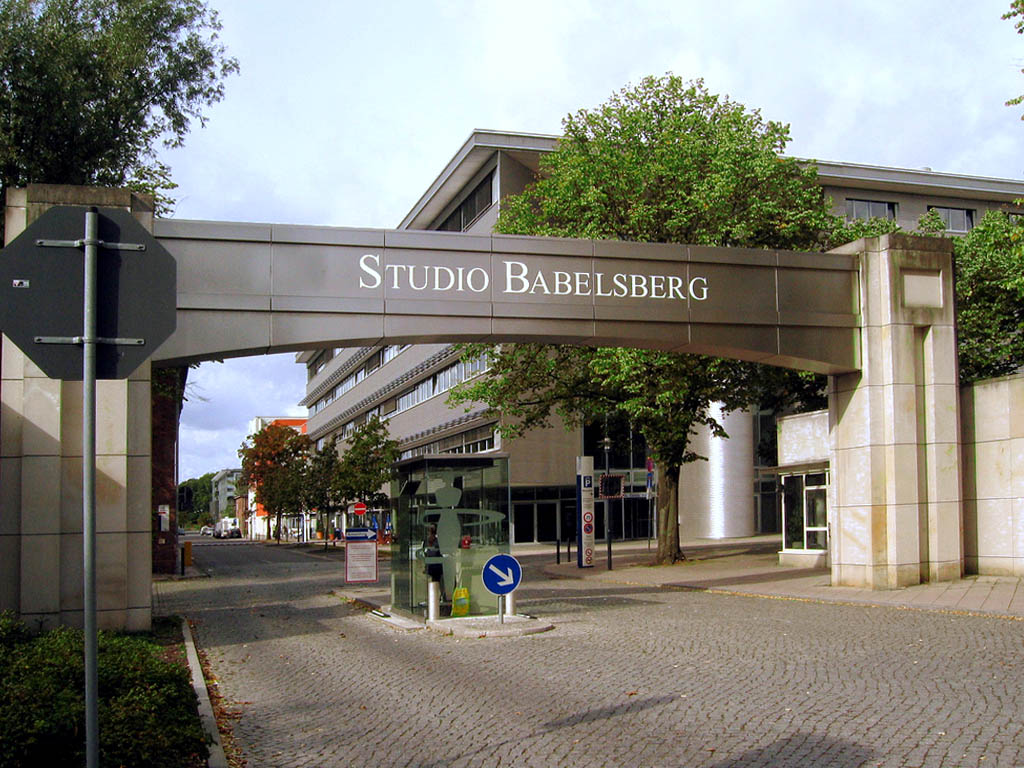
The largest internationally operating media companies in Germany are Bertelsmann, Axel Springer SE and ProSiebenSat.1 Media. Germany's television market is the largest in Europe, with over 38 million TV households as of 2012. Around 90% of German households have cable or satellite TV, with a variety of free-to-view public and commercial channels. There are more than 300 public and private radio stations in Germany; Germany's national radio network is the Deutschlandradio, while the public Deutsche Welle is the main radio and television broadcaster in foreign languages. Germany's print media market is the largest in Europe. The German newspapers with the highest circulation are «Bild», «Süddeutsche Zeitung», «Frankfurter Allgemeine Zeitung» and «Die Welt». The largest German magazines include «ADAC Motorwelt» and «Der Spiegel». Germany has a large video gaming market, with over 34 million players nationwide. The annual Gamescom held in Cologne is the world's largest gaming convention.
German cinema has made major technical and artistic contributions to film. The first works of the Skladanowsky Brothers were shown to an audience in 1895. The renowned Babelsberg Studio in Potsdam was established in 1912, thus being the first large-scale film studio in the world. Early German cinema was particularly influential with German expressionists such as Robert Wiene and Friedrich Wilhelm Murnau. Director Fritz Lang's Metropolis (1927) is referred to as the first major science-fiction film. After 1945, many of the films of the immediate post-war period can be characterised as «Trümmerfilm» (rubble film). East German film was dominated by the state-owned film studio DEFA, while the dominant genre in West Germany was the «Heimatfilm» ("homeland film"). During the 1970s and 1980s, New German Cinema directors such as Volker Schlöndorff, Werner Herzog, Wim Wenders, and Rainer Werner Fassbinder brought West German auteur cinema to critical acclaim.
The Academy Award for Best Foreign Language Film ("Oscar") went to the German production The Tin Drum («Die Blechtrommel») in 1979, to Nowhere in Africa («Nirgendwo in Afrika») in 2002, and to The Lives of Others («Das Leben der Anderen») in 2007. Various Germans won an Oscar for their performances in films. The annual European Film Awards ceremony is held every other year in Berlin, home of the European Film Academy. The Berlin International Film Festival known as "Berlinale", awarding the "Golden Bear" and held annually since 1951, is one of the world's leading film festivals. The "Lolas" are annually awarded in Berlin, at the German Film Awards.
Cuisine
German cuisine
German cuisine varies across the country and neighbouring regions often share culinary similarities, such as those found in Bavaria, Franconia and Swabia, Switzerland, and Austria. International varieties such as pizza, sushi, Chinese food, Turkish food, Indian cuisine, and doner kebab are popular as well.
Bread is a significant part of German cuisine, with German bakeries producing about 600 main types of bread and 1,200 types of pastries and rolls («Brötchen»). German cheeses account for about 22% of all cheese produced in Europe. Germans produce their ubiquitous sausages in almost 1,500 varieties, including Bratwurst and Weißwurst.
The national alcoholic drink is beer. Germany's beer consumption per capita stood at 110litres in 2013 and remains among the highest in the world. German beer purity regulations date back to the 16th century. Wine has become popular in many parts of the country, especially near the German wine regions. In 2019, Germany was the ninth-largest wine producer in the world.
The 2018 Michelin Guide awarded eleven restaurants in Germany three stars, giving the country a cumulative total of 300 stars.
Sports
Sport in Germany
Football is the most popular sport in Germany. With more than 7 million official members, the German Football Association (Deutscher Fußball-Bund) is the largest single-sport organisation worldwide, and the German top league, the Bundesliga, attracts the second-highest average attendance of all professional sports leagues in the world. The German men's national football team won the FIFA World Cup in 1954, 1974, 1990, and 2014, the UEFA European Championship in 1972, 1980 and 1996, and the FIFA Confederations Cup in 2017.
Germany is one of the world's leading motor sports countries, with constructors such as BMW and Mercedes playing prominent roles in international competition. Porsche has won the 24 Hours of Le Mans race 19 times, and Audi 13 times, As of 2024-04. The driver Michael Schumacher has set many motor sport records, having won seven Formula One World Drivers' Championships. Sebastian Vettel is also among the most successful Formula One drivers of all time.
German athletes historically have been successful contenders in the Olympic Games, ranking third in an all-time Olympic Games medal count when combining East and West German medals prior to German reunification. In 1936, Berlin hosted the Summer Games and the Winter Games in Garmisch-Partenkirchen. Munich hosted the Summer Games of 1972.
See also
Notes
References
Citations
- Surface water and surface water change, 11 October 2020, Organisation for Economic Co-operation and Development, 24 March 2021, live
- Population by nationality and sex (quarterly figures), DESTATIS, 25 September 2025
- Ergebnisse des Zensus 2022 – Bevölkerung (15.05.2022), Destatis, 25 June 2024, de, 3 July 2025
- IMF Data., International Monetary Fund, October 2025, 13 November 2025
- Germany: A New History, Schulze, Hagen, Harvard University Press, 1998, Hagen Schulze
- Etymologisches Wörterbuch des Althochdeutschen, Band II, Lloyd, Albert L., Lühr, Rosemarie, Springer, Otto, Vandenhoeck & Ruprecht, 1998, 699–704, German, 11 September 2015, live
- Lloyd, Albert L., Etymologisches Wörterbuch des Althochdeutschen, Band II, 1998, Vandenhoeck & Ruprecht, 685–686, Lühr, Rosemarie, Springer, Otto, German, live, 16 September 2015
- Wagner, G. A, Krbetschek, M, Degering, D, Bahain, J.-J, Shao, Q, Falgueres, C, Voinchet, P, Dolo, J.-M, Garcia, T, Rightmire, G. P, 27 August 2010, Radiometric dating of the type-site for Homo heidelbergensis at Mauer, Germany, PNAS, 107, 46, 19726–19730, 10.1073/pnas.1012722107, 2993404, 21041630, free
- Natural History Museum, Who were the Neanderthals?, Hendry, Lisa, 5 May 2018, 30 March 2020, live
- Earliest music instruments found, 25 May 2012, BBC News, live, 3 September 2017
- Ice Age Lion Man is world's earliest figurative sculpture, 31 January 2013, The Art Newspaper, 15 February 2015
- Nature, 459, A female figurine from the basal Aurignacian of Hohle Fels Cave in southwestern Germany, Conard, Nicholas, 2009, 7244, 248–252, 10.1038/nature07995, 19444215
- "It must be a woman" – The female depictions from Hohle Fels date to 40,000 years ago..., Universität Tübingen, 22 July 2016, 11 October 2016, dead, mdy-all
- Germany: Ancient History, Heather, Peter, Peter Heather, Encyclopædia Britannica Online, 21 November 2020, 31 March 2019, live
- Germanic Tribes (Teutons), History Files, 26 April 2020, live, 16 March 2020
- Medieval Experience: 300–1400, Claster, Jill N., New York University Press, 1982
- Hickey, Raymond, Contact and the History of Germanic Languages, Roberge, Paul, The Handbook of Language Contact, 2020, John Wiley & Sons Ltd., 2nd, 323–325, 10.1002/9781119485094.ch16
- Heather, Peter, Peter Heather, Germany: Ancient History, live, 31 March 2019, 21 November 2020, Encyclopædia Britannica Online
- The Battle That Stopped Rome: Emperor Augustus, Arminius, and the Slaughter of the Legions in the Teutoburg Forest, Wells, Peter, W. W. Norton & Company, 2004
- Bordewich, Fergus M., The Ambush That Changed History, September 2006, Smithsonian Magazine
- Frontiers of the Roman Empire – The Lower German Limes, 10 April 2025, UNESCO
- Modi, J. J., 1916, The Ancient Germans: Their History, Constitution, Religion, Manners and Customs, The Journal of the Anthropological Society of Bombay, 10, 7, Raetia (modern Bavaria and the adjoining country)
- The Cambridge Ancient History: X, The Augustan Empire, 43 B.C. – A.D. 69, Rüger, C., Cambridge University Press, 2004, Bowman, Alan K., 2nd, 10, 527–28, Germany, 1996, Champlin, Edward, Lintott, Andrew, 23 December 2016, live
- The crisis of empire, A.D. 193–337, Bowman, Alan K., Garnsey, Peter, Cameron, Averil, Cambridge University Press, 2005, The Cambridge Ancient History, 12
- Franks and Saracens, Falk, Avner, Routledge, 2018
- Lives of the Popes: The Pontiffs from St. Peter to Benedict XVI, McBrien, Richard, HarperCollins, 2000
- Nelson, Lynn Harry, The Great Famine (1315–1317) and the Black Death (1346–1351), University of Kansas, 19 March 2011, 29 April 2011, live
- Eisenstein, Elizabeth, 1980, 3, –43, The printing press as an agent of change, limited, Cambridge University Press
- Cantoni, Davide, Adopting a New Religion: The Case of Protestantism in 16th Century Germany, 2011, Barcelona GSE Working Paper Series, 17 March 2020, 9 August 2017, live
- Philpott, Daniel, January 2000, The Religious Roots of Modern International Relations, World Politics, 52, 2, 206–245, 10.1017/S0043887100002604, 1424223
- The Savage Wars of Peace: England, Japan and the Malthusian Trap, Macfarlane, Alan, Blackwell, 1997
- Härter, Karl, The Early Modern Holy Roman Empire of the German Nation (1495–1806): A Multi-Layered Legal System, Law and Empire: Ideas, Practices, Actors, Jeroen Duindam, Jill Diana Harries, Caroline Humfress, Hurvitz Nimrod, Brill, 2013, 10.1163/9789004249516_007
- Cultures of Power in Europe during the Long Eighteenth Century, Hamish Scott, Brendan Simms, 2007, limited, Cambridge University Press
- British Museum, 15 March 2020, Maria Theresa, Holy Roman Empress and Queen of Hungary and Bohemia, 20 June 2021, live
- A History of Eastern Europe: Crisis and Change, limited, Bideleux, Robert, Jeffries, Ian, Routledge, 1998
- Region, State and Identity in Central and Eastern Europe, Batt, Judy, Wolczuk, Kataryna, Routledge, 2002
- 307–308, The Wiley-Blackwell Dictionary of Modern European History Since 1789, Nicholas Atkin, Michael Biddiss, Frank Tallett, Wiley, 2011
- Austria, Prussia, and the German Confederation: The Defense of Central Europe, 1815–1854, Sondhaus, Lawrence, 50–74, Talbot C. Imlay, Monica Duffy Toft, The Fog of Peace and War Planning: Military and Strategic Planning under Uncertainty, Routledge, 2007
- Henderson, W. O., January 1934, The Zollverein, History, 19, 73, 1–19, 10.1111/j.1468-229X.1934.tb01791.x
- 40963126, 'The Old Forms are Breaking Up, ... Our New Germany is Rebuilding Itself': Constitutionalism, Nationalism and the Creation of a German Polity during the Revolutions of 1848–49, Hewitson, Mark, The English Historical Review, 125, 516, 1173–1214, 2010, 10.1093/ehr/ceq276
- Issues Relevant to U.S. Foreign Diplomacy: Unification of German States, US Department of State Office of the Historian, 18 March 2020, 1 October 2019, live
- Otto von Bismarck (1815–1898), BBC, 18 March 2020, 27 November 2019, live
- 260734, Kaiser Wilhelm II and German Politics, Journal of Contemporary History, 25, 1990, 289–316, Mommsen, Wolfgang J., 2/3, 10.1177/002200949002500207
- 100 maps, Sterling Publishing, 2005, Black, John
- The Diplomat, How Imperial Germany Lost Asia, Farley, Robert, 17 October 2014, 19 March 2020, live
- Olusoga, David, Erichsen, Casper, 2010, The Kaiser's Holocaust: Germany's Forgotten Genocide and the Colonial Roots of Nazism, Faber and Faber
- Holocaust, Genocide, and the Law: A Quest for Justice in a Post-Holocaust World, Michael Bazyler, Michael Bazyler, 2016, 169–70, Oxford University Press
- Oltermann, Philip, 28 May 2021, Germany agrees to pay Namibia €1.1bn over historical Herero-Nama genocide, The Guardian, 1 June 2021
- Last German World War I veteran believed to have died, Crossland, David, 22 January 2008, Spiegel Online, live, 8 October 2012
- Versailles: A Reassessment after 75 Years, Boemeke, Manfred F., Feldman, Gerald D., Glaser, Elisabeth, Cambridge University Press, 1998, Publications of the German Historical Institute, 1–20, 203–220, 469–505
- GERMAN TERRITORIAL LOSSES, TREATY OF VERSAILLES, 1919, United States Holocaust Memorial Museum, live, 4 July 2016, 11 June 2016
- Nicholls, AJ, Weimar and the Rise of Hitler, Macmillan, 2016, 56–70, 1919–1922: Years of Crisis and Uncertainty
- 3113137, The United States and the Reconstruction of Germany in the 1920s, Frank, Costigliola, The Business History Review, 50, 4, 1976, 477–502, 10.2307/3113137
- The Weimar Republic, Kolb, Eberhard, 2nd, Psychology Press, 2005, P. S. Falla, R. J. Park
- Dimsdale, Nicholas H., Horsewood, Nicholas, Van Riel, Arthur, September 2006, Unemployment in Interwar Germany: An Analysis of the Labor Market, 1927–1936, Journal of Economic History, 66, 3, 10.1017/S0022050706000325
- Richard, Evans, The Coming of the Third Reich, Penguin, 2003
- 21 March 1933, Ein Konzentrationslager für politische Gefangene in der Nähe von Dachau, Münchner Neueste Nachrichten, German, 10 May 2000
- Marc, von Lüpke-Schwarz, The law that 'enabled' Hitler's dictatorship, 23 March 2013, Deutsche Welle, 27 April 2020, live
- Industrie und Wirtschaft, Deutsches Historisches Museum, German, live, 30 April 2011, 25 March 2011
- Evans, Richard, 2005, The Third Reich in Power, Penguin, 322, –326, 329, registration
- Prologue, Bradsher, Greg, 2010, The Nuremberg Laws, 42, 20 March 2020, live, 25 April 2020
- National Archives, Descent into War, 19 March 2020, 20 March 2020, live
- The "Night of Broken Glass", United States Holocaust Memorial Museum, live, 11 February 2017, 8 February 2017
- German-Soviet Pact, United States Holocaust Memorial Museum, 19 March 2020, 11 March 2020, live
- Hiden, John, Lane, Thomas, 2003, The Baltic and the Outbreak of the Second World War, Cambridge University Press, 143–144
- United States Holocaust Memorial Museum, World War II: Key Dates, 19 March 2020, 11 March 2020, live
- Ian, Kershaw, Stalinism and Nazism: dictatorships in comparison, Cambridge University Press, 1997
- Nuremberg: Nazis on Trial, Overy, Richard, 17 February 2011, BBC, live, 16 March 2011
- The Columbia Guide to the Holocaust, registration, Niewyk, Donald L., Nicosia, Francis R., Columbia University Press, 2000, 45, –52
- Polska 1939–1945: Straty osobowe i ofiary represji pod dwiema okupacjami, Institute of National Remembrance, 2009
- Maksudov, S, 1994, Soviet Deaths in the Great Patriotic War: A Note, Europe-Asia Studies, 46, 4, 671–680, 10.1080/09668139408412190, 12288331
- Deutsche militärische Verluste im Zweiten Weltkrieg, Overmans, Rüdiger, 2000, Oldenbourg
- The End; Germany 1944–45, Kershaw, Ian, Allen Lane, 2011
- Demshuk, Andrew, 2012, The Lost German East, 1 December 2016, live, Cambridge University Press
- 10.1093/hwj/dbp009, 2009, Trabant and Beetle: the Two Germanies, 1949–89, History Workshop Journal, 68, 1–2
- Capital dilemma: Germany's search for a new architecture of democracy, Wise, Michael Z., Princeton Architectural Press, 1998
- Economic Growth in Europe Since 1945, Carlin, Wendy, Cambridge University Press, 1996, Crafts, Nicholas, West German growth and institutions (1945–90), Toniolo, Gianni
- Deutschland in den 50er Jahren: Wirtschaft in beiden deutschen Staaten, Werner, Bührer, 24 December 2002, Bundeszentrale für politische Bildung, Economy in both German states, live, 1 December 2017, 256, de
- A History of Germany 1918–2014: The Divided Nation, Wiley, Fulbrook, Mary, 2014
- Rearmament and the European Defense Community, Library of Congress Country Studies, 19 May 2023, 11 October 2011, live
- 22, 41, The Workers' and Peasants' State: Communism and Society in East Germany Under Ulbricht 1945–71, Major, Patrick, Osmond, Jonathan, Manchester University Press, 2002
- Westward Tide of East Germans Is a Popular No-Confidence Vote, Protzman, Ferdinand, 22 August 1989, The New York Times, live, 4 October 2012
- The Berlin Wall, live, 26 February 2017, 8 February 2017, BBC
- 122–123, Williams, Geoffrey Lee, Williams, Alan Lee, The European Defence Initiative, National Perspectives within the Alliance: Impediments to Defence Integration, 1986, 10.1007/978-1-349-07825-7_8
- Wende Museum, Iconoclash! Political Imagery from the Berlin Wall to German Unification, Deshmukh, Marion, 20 March 2020, 20 June 2021, live
- What the Berlin Wall still stands for, 8 November 1999, CNN Interactive, live, 6 February 2008
- Vertrag zwischen der Bundesrepublik Deutschland und der Deutschen Demokratischen Republik über die Herstellung der Einheit Deutschlands (Einigungsvertrag) Art 11 Verträge der Bundesrepublik Deutschland, Bundesministerium für Justiz und Verbraucherschutz, German, live, 25 February 2015, 15 May 2015
- Gesetz zur Umsetzung des Beschlusses des Deutschen Bundestages vom 20. Juni 1991 zur Vollendung der Einheit Deutschlands, 26 April 1994, Bundesministerium der Justiz, German, Law on the Implementation of the Beschlusses des Deutschen Bundestages vom 20. Juni 1991 zur Vollendung der Einheit Deutschlands, live, 14 July 2016
- 12 April 1999, Brennpunkt: Hauptstadt-Umzug, live, 30 April 2011, Focus, German
- In East Germany, a Decline as Stark as a Wall, Kulish, Nicholas, 19 June 2009, The New York Times, live, 3 April 2011
- 20787989, Germany's EU Policy: The Domestic Discourse, Lemke, Christiane, German Studies Review, 33, 3, 2010, 503–516
- CNN, Eurozone Fast Facts, 21 January 2020, 21 March 2020, live
- Germany is planning a Bosnia withdrawal, Dempsey, Judy, 31 October 2006, International Herald Tribune, live, 11 November 2012
- Deutsche Welle, Germany to extend Afghanistan military mission, Ben, Knight, 13 February 2019, 4 March 2020, live
- Germany agrees on 50-billion-euro stimulus plan, 6 January 2009, France 24, 13 May 2011
- Government declaration by Angela Merkel, 29 January 2014, ARD Tagesschau, German, 1 January 2015
- Migrant crisis: Migration to Europe explained in seven charts, 28 January 2016, live, 31 January 2016, BBC
- Germany, World Factbook, CIA, 29 March 2020, 9 January 2021, live
- 4 September 2023, Germany country profile, BBC, 20 September 2023
- 17: Gebiet und geografische Angaben, Statistische Jahrbuch Schleswig-Holstein 2019/2020, Statistisches Amt für Hamburg und Schleswig-Holstein, 2020, de, 8 September 2020, 28 October 2020, live
- Encyclopedia Britannica, Germany: Climate, 23 March 2020, 23 March 2020, live
- 28 November 2023, Consequences of the climate crisis in Germany are becoming more severe, Umweltbundesamt
- Statista, Average monthly temperature in Germany from February 2019 to February 2020, February 2020, 23 March 2020, 23 March 2020, live
- Statista, Average monthly precipitation in Germany from February 2019 to February 2020, February 2020, 23 March 2020, 23 March 2020, live
- Average monthly sunshine hours in Germany from February 2019 to February 2020, Statista, February 2020, 23 March 2020, 23 March 2020, live
- Dinerstein, Eric, Olson, David, Joshi, Anup, Vynne, Carly, Burgess, Neil D., Wikramanayake, Eric, Hahn, Nathan, Palminteri, Suzanne, Hedao, Prashant, Noss, Reed, Hansen, Matt, Locke, Harvey, Ellis, Erle C, Jones, Benjamin, Barber, Charles Victor, Hayes, Randy, Kormos, Cyril, Martin, Vance, Crist, Eileen, Sechrest, Wes, Price, Lori, Baillie, Jonathan E. M., Weeden, Don, Suckling, Kierán, Davis, Crystal, Sizer, Nigel, Moore, Rebecca, Thau, David, Birch, Tanya, Potapov, Peter, Turubanova, Svetlana, Tyukavina, Alexandra, de Souza, Nadia, Pintea, Lilian, Brito, José C., Llewellyn, Othman A., Miller, Anthony G., Patzelt, Annette, Ghazanfar, Shahina A., Timberlake, Jonathan, Klöser, Heinz, Shennan-Farpón, Yara, Kindt, Roeland, Lillesø, Jens-Peter Barnekow, van Breugel, Paulo, Graudal, Lars, Voge, Maianna, Al-Shammari, Khalaf F., Saleem, Muhammad, An Ecoregion-Based Approach to Protecting Half the Terrestrial Realm, BioScience, 67, 6, 2017, 534–545, 10.1093/biosci/bix014, free, 28608869, 5451287
- Climate impact of farming, land use (change) and forestry in Germany, Appunn, Kerstine, Clean Energy Wire, 30 October 2018, 13 May 2020, live
- 23 March 2020, Spruce, pine, beech, oak – the most common tree species, Third National Forest Inventory, Federal Ministry of Food and Agriculture, 24 March 2020, live
- Adventure Guide Germany, Bekker, Henk, Hunter, 2005
- Compendium of Symbolic and Ritual Plants in Europe: Herbs, Marcel Cleene, Marie Claire Lejeune, Man & Culture, 2002, 194–196, 3 June 2020, 6 June 2020, live
- National Parks, Federal Agency for Nature Conservation, 23 March 2020, 24 March 2020, live
- Biosphere reserves, Federal Agency for Nature Conservation, 23 March 2020, 24 March 2020, live
- Nature parks, Federal Agency for Nature Conservation, 23 March 2020, 19 April 2019, live
- Zoo Facts, Zoos and Aquariums of America, 7 October 2003, 16 April 2011
- Der Zoologische Garten Berlin, Zoo Berlin, German, live, 30 April 2011, 19 March 2011
- Basic Law for the Federal Republic of Germany, October 2010, Deutscher Bundestag, live, 19 June 2017, 14 April 2011
- DW, Election 2013: The German parliament, 19 September 2013, Seiffert, Jeanette, 28 March 2020, live
- 7 June 2019, Germany's political parties CDU, CSU, SPD, AfD, FDP, Left party, Greens – what you need to know, live, 14 February 2020, DW
- The Independent, German elections: Far-right wins MPs for first time in half a century, Stone, Jon, 24 September 2017, 27 February 2020, live
- Germany, Encyclopedia Britannica, live, 18 March 2021, 13 June 2015
- Example for state constitution: "Constitution of the Land of North Rhine-Westphalia", Landtag (state assembly) of North Rhine-Westphalia, 17 January 2013, 17 July 2011
- Verwaltungsgliederung in Deutschland am 30 June 2017 – Gebietsstand: 30 June 2017 (2. Quartal), July 2017, Statistisches Bundesamt, Deutschland, German, XLS, live, 10 October 2017, 9 August 2017
- Fläche und Bevölkerung, Statistikportal.de, de, 15 July 2018, 12 June 2018, live
- Bruttoinlandsprodukt, Bruttowertschöpfung, Statistische Ämter des Bundes und der Länder, 28 March 2024, german
- Bruttoinlandsprodukt, Bruttowertschöpfung (Inhaltsverzeichnis Reihe 1991–2023), Statistische Ämter des Bundes und der Länder, 28 March 2024, german
- 31–32, 62, 2007, Stanford University Press, The Civil Law Tradition: An Introduction to the Legal Systems of Europe and Latin America, Merryman, John, Pérez-Perdomo, Rogelio
- Federal Constitutional Court, Bundesverfassungsgericht, live, 13 December 2014, 25 March 2015
- German Law Archive, The Federal Constitutional Court: an Introduction, Wöhrmann, Gotthard, 22 November 2013, 29 March 2020, 20 June 2021, live
- § 2 Strafvollzugsgesetz, de, Bundesministerium der Justiz, 1 May 2011, 26 March 2011, live
- Criminal Justice in Germany, Jehle, Jörg-Martin, German Federal Ministry of Justice, Federal Ministry of Justice (Germany), Forum-Verlag, 2009, 22 September 2015, live
- Casper, Gerhard, Zeisel, Hans, :de:Hans Zeisel, January 1972, Lay Judges in the German Criminal Courts, Journal of Legal Studies, 1, 1, 135–191, 10.1086/467481, 724014, Gerhard Casper
- United Nations Office on Drugs and Crime, Intentional Homicide Victims, 30 March 2020, live, 26 July 2019
- Germany's crime rate fell to lowest level in decades in 2018, 2 April 2019, DW, 17 May 2019, live
- DW, Germany: Violent crime reaches 15-year high — report, 4 June 2024, Martin, Nik
- STONEWALL GLOBAL WORKPLACE BRIEFINGS 2018 – GERMANY, Stonewall, 2 September 2023, 2 September 2023, live
- The German Missions Abroad, German Federal Foreign Office, 29 March 2020, 27 March 2020, live
- The Embassies, German Federal Foreign Office, 29 March 2020, 27 March 2020, live
- Freed, John, 4 April 2008, The leader of Europe? Answers an ocean apart, live, 1 May 2011, The New York Times
- 13 May 2004, Declaration by the Franco-German Defence and Security Council, 27 March 2014, French Embassy UK
- Shaping Globalization – Expanding Partner-ships – Sharing Responsibility: A strategy paper by the German Government, Die Bundesregierung, 29 March 2020, 29 March 2020, live
- Sterio, Milena, The right to self-determination under international law: "selfistans", secession and the rule of the great powers, 2013, Routledge
- Paul, T.V., Balance of Power: Theory and Practice in the 21st century, Wirtz, James, Fortmann, Michel, 2004, Stanford University Press
- U.S. Relations With Germany, 4 November 2019, US Department of State, 31 March 2020, live
- May 2006, U.S.-German Economic Relations Factsheet, 11 May 2011, 26 March 2011, U.S. Embassy in Berlin
- Aims of German development policy, Federal Ministry for Economic Cooperation and Development, 10 April 2008, live, 10 March 2011
- Devex, Germany, foreign aid, and the elusive 0.7%, Green, Andrew, 8 August 2019, 8 August 2019, live
- 29 July 2024, Bundeswehr der Zeitenwende: Kriegstüchtig sein, um abschrecken zu können, bmvg.de, de
- April 2025, Trends in Military Expenditure 2024, 12 December 2025, Stockholm International Peace Research Institute
- Germany commits €100 billion to defense spending, 27 February 2022, Deutsche Welle, 27 February 2022, live
- Schuetze, Christopher F., 27 February 2022, Russia's invasion prompts Germany to beef up military funding, The New York Times, 27 February 2022, live
- 17 June 2024, Defence Expenditure of NATO Countries (2014–2024), NATO, 8–9, PDF
- Personalzahlen, 31 July 2024, Bundeswehr, de
- Ausblick: Die Bundeswehr der Zukunft, Bundeswehr, German, live, 4 June 2011, 5 June 2011
- Germany to abolish compulsory military service, Connolly, Kate, 22 November 2010, The Guardian, live, 17 September 2013
- Marching orders for conscription in Germany, but what will take its place?, Pidd, Helen, 16 March 2011, The Guardian, live, 22 September 2013
- Frauen in der Bundeswehr, Bundeswehr, German, live, 29 April 2011, 14 April 2011
- Pieter D., Wezeman, Katarina, Djokic, Mathew, George, Zain, Hussain, Siemon T., Wezeman, Trends in international Arms Transfer 2024, 10.55163/XXSZ9056, March 2025, sipri.org
- Grundgesetz für die Bundesrepublik Deutschland, Artikel 65a,87,115b, Bundesministerium der Justiz, German, 28 May 2017, 19 March 2011
- Einsatzzahlen – die Stärke der deutschen Kontingente, 18 August 2017, Bundeswehr, German, live, 23 August 2017
- 1 June 2020, Germany extends unified armed forces mission in Mali, International Insider, 6 March 2021, 26 February 2021, live
- 24 January 2020, Corruption Perceptions Index 2019, live, 27 March 2020, 29 March 2020, Transparency International
- The Global Competitiveness Report 2018, Schwab, Klaus, 29 March 2020, 24 February 2020, live
- Deutschland ist wieder Nummer drei der größten Volkswirtschaften, 15 February 2024, Der Spiegel, de, 17 February 2024, live
- World Bank, GDP, PPP (current international $), 18 November 2024, 27 March 2024, live
- GDP per capita in PPS, 9 June 2025, Eurostat
- Eurostat, Unemployment statistics, 29 March 2020, 6 April 2020, live
- The European single market, 5 July 2016, European Commission, 30 March 2020, 9 April 2020, live
- Germany: Spend More At Home, International Monetary Fund, 28 April 2018, live, 8 January 2018
- Germans Say Goodbye to the Mark, a Symbol of Strength and Unity, Andrews, Edmund L., 1 January 2002, The New York Times, live, 1 May 2011
- Monetary policy, live, 20 June 2021, 30 March 2020, Bundesbank
- Frankfurt as a financial centre after Brexit, Lavery, Scott, Schmid, Davide, University of Sheffield, live, SPERI Global Political Economy Brief, 2018, 30 March 2020, 20 June 2021
- The United States is Germany's main trading partner, 8 March 2025, Federal Statistical Office of Germany
- Foreign trade, live, 2 May 2015, 23 April 2015, Statistiches Bundesamt
- Electrive, CAM study reveals: German carmakers are most innovative, 10 December 2019, Randall, Chris, 10 May 2020, live
- Cars, 8 March 2025, The Observatory of Economic Complexity
- 20 December 2022, Hyundai, Now the No. 3 Carmaker, Takes Aim at Toyota and Volkswagen, Bloomberg, 7 February 2023, live
- Fortune, Global 500, 30 March 2020, 20 June 2021, live
- Bloomberg, DAX, 30 March 2020, 21 May 2020, live
- Frost, Simon, 28 August 2015, Berlin outranks London in start-up investment, live, 6 November 2015, euractiv.com
- The Telegraph, Secrets of growth: the power of Germany's Mittelstand, Dakers, Marion, 11 May 2017, 6 March 2019, live
- BBC News, Germany's 'hidden champions' of the Mittelstand, Bayley, Caroline, 17 August 2017, 22 May 2019, live
- Federal Report on Research and Innovation 2014, 2014, Federal Ministry of Education and Research, 14 May 2016, 26 March 2015
- Gross domestic spending on R&D, 17 December 2023, OECD, 15 December 2023, live
- McCarthy, Niall, The countries leading the world in scientific research, World Economic Forum, 13 January 2020, 12 March 2020, live
- Plackett, Benjamin, 18 June 2024, Nature Index 2024 Research Leaders: India follows in China's footsteps as top ten changes again, Nature Index
- Nature, An introduction to the complexities of the German research scene, 27 March 2019, Hristio, Boytchev, 567, 7749, S34–S35, 10.1038/d41586-019-00910-7, 30918381, free
- German Aerospace Centre, 28 November 2019, Germany invests 3.3 billion euro in European space exploration and becomes ESA's largest contributor, 17 May 2020, 20 June 2021, live
- Dutta, Soumitra, Global Innovation Index 2025: Innovation at a Crossroads, Lanvin, Bruno, World Intellectual Property Organization, 2025, 10.34667/tind.588647
- Assessment of strategic plans and policy measures on Investment and Maintenance in Transport Infrastructure, 2012, International Transport Forum, 1 January 2015, 15 March 2014
- Eurostat, Transport infrastructure at regional level, 30 March 2020, 15 September 2018, live
- Jeremic, Sam, Fun, fun, fun on the autobahn, 16 September 2013, The West Australian, 12 October 2013, live
- ICE High-Speed Trains, Eurail, 3 April 2020, 11 October 2019, live
- ADV Monthly Traffic Report 12/2022, Arbeitsgemeinschaft Deutscher Verkehrsflughäfen e.V., 13 February 2023, 16 February 2023, live
- Port of Hamburg, Top World Container Ports, 3 April 2020, 10 October 2017, live
- Germany, live, 5 June 2023, 30 August 2023, US Energy Information Administration
- Paddison, Schmidt, Kappeler, Laura, Nadine, Inke, 15 April 2023, 'A new era': Germany quits nuclear power, closing its final three plants, CNN, 22 April 2023, live
- Wettengel, Julian, 2 January 2019, Renewables supplied 40 percent of net public power in Germany in 2018, live, 20 June 2021, 10 April 2020, Clean Energy Wire
- International Energy Agency, 16 December 2021, Germany, 24 May 2022, 24 May 2022, live
- Federal Ministry for the Environment, Langfristszenarien und Strategien für den Ausbau der erneuerbaren Energien in Deutschland bei Berücksichtigung der Entwicklung in Europa und global, 29 March 2012, Federal Ministry for the Environment (BMU), Long-term Scenarios and Strategies for the Development of Renewable Energy in Germany Considering Development in Europe and Globally, live, 21 September 2015
- 16 December 2021, Germany, live, 24 May 2022, 24 May 2022, International Energy Agency
- Germany: The World's First Major Renewable Energy Economy, dead, 29 March 2015, 24 February 2024
- 25 September 2023, China and Germany – Working for an Energy Efficient Future, live, 4 February 2024, Energiepartnershcaft
- Germany's Energy Efficiency Strategy 2050, March 2020, Federal Ministry for Economic Affairs and Energy, 30 January 2024, live
- 2017, Committed to Biodiversity, live, 12 February 2020, 10 April 2020, Federal Ministry for Economic Cooperation and Development
- Eddy, Melissa, 15 November 2019, Germany Passes Climate-Protection Law to Ensure 2030 Goals, live, 13 March 2020, The New York Times
- Legal Country Mapping: Germany, WaterLex, 6 July 2018, 27 March 2021, 28 September 2020, live
- Climate Action, Germany is the world's leading nation for recycling, 11 December 2017, 11 September 2019, live
- Olefs, M., Formayer, H., Gobiet, A., Marke, T., Schöner, W., Revesz, M., 1 June 2021, Past and future changes of the Austrian climate – Importance for tourism, Journal of Outdoor Recreation and Tourism, 34, 100395, 10.1016/j.jort.2021.100395, free
- Tourism as a driver of economic growth in Germany, Federal Ministry for Economic Affairs and Energy, November 2017, 5 July 2020, 8 July 2020, live
- World Tourism Barometer, 21, 2, May 2023, International Tourism – 2023 starts on a strong note with the Middle East recovering 2019 levels in the first quarter, 2 August 2023, live
- DW, Germany's most visited landmarks, 5 July 2020, 6 July 2020, live
- Statista, Attendance at the Europa Park Rust theme park from 2009 to 2018 (in millions), 19 June 2020, 5 July 2020, 1 August 2020, live
- Immigration Drives Germany's Population Growth to 84.7 Million, ETIAS, 30 January 2024
- National Minorities in Germany, May 2010, Federal Ministry of the Interior (Germany), 21 April 2013, 23 June 2014
- Webb, Alex, 20 May 2014, Germany Top Migration Land After U.S. in New OECD Ranking, Bloomberg, 17 March 2015, live
- International Migration Report 2015 – Highlights, 2015, United Nations Department of Economic and Social Affairs, live, 13 May 2016, 9 June 2016
- Germany: Asylum applications rose sharply in 2023, Deutsche Welle, 9 January 2024
- Current population, 20 June 2023, Federal Statistical Office, 26 August 2023, live
- OECD, Foreign population, 28 October 2021, 13 March 2020, live
- 20 April 2023, Statistisches Bundesamt, Pressemitteilung Nr. 158 vom 20. April 2023, 7 November 2023, live
- Demographia, World Urban Areas, 3 May 2018, 31 July 2016
- Bevölkerung nach Religionszugehörigkeit im Zensus 2022 und im Zensus 2011 - je Bundesland, 2 July 2024, Statistisches Bundesamt, de
- 28 August 2024, Religionszugehörigkeiten 2023, fowid.de, de
- Eastern Germany: the most godless place on Earth, Thompson, Peter, 22 September 2012, The Guardian, live, 29 September 2013
- Germany, Berkley Center for Religion, Peace, and World Affairs, 24 March 2015, 27 March 2015
- Bevölkerung im regionalen Vergleich nach Religion (ausführlich) -in %-, 9 May 2011, Zensus 2011, Federal Statistical Office of Germany, German, live, 21 June 2013
- Zensus 2011 – Fakten zur Bevölkerung in Deutschland" am 31. Mai 2013 in Berlin, Federal Statistical Office of Germany, German, 28 September 2017, 10 October 2017, 2011 Census – Facts about the population of Germany on 31 May 2013 in Berlin, live
- Muslimisches Leben in Deutschland 2020, Federal Office for Migration and Refugees, April 2020, 9 August 2021
- Germany: Berlin Facing Challenge Of Assimilating Russian-Speaking Jews, 8 April 2008, Radio Free Europe / Radio Liberty, 12 March 2017, 29 October 2016, live
- German Jews more than victims, community head says, Jewish Journal, 5 January 2011, 31 October 2018, live
- Jewish Berlin: Myths and Fragmentation, Humanity in Action, 12 March 2017, dead, 13 March 2017
- Special Eurobarometer 243: Europeans and their Languages (Survey), 2006, Europa, live, 14 April 2016, 28 March 2011
- Special Eurobarometer 243: Europeans and their Languages (Executive Summary), European Commission, 2006, Europa, live, 30 April 2011, 28 March 2011
- Frequently asked questions on languages in Europe, 26 September 2013, European Commission, 5 July 2020, 5 July 2020, live
- The German Language, 20 February 2018, FAZIT Communication GmbH, 5 July 2020, 2 October 2020, live
- European Commission, Directorate-General for Communication, Special Eurobarometer survey "Europeans and their languages", May 2024, 10.2766/28257
- Country profile: Germany, April 2008, Library of Congress, live, 27 April 2011, 28 March 2011
- Education in Germany, Trines, Stefan, 8 November 2016, World Education News and Reviews, 5 July 2020, 5 April 2019, live
- A German model goes global, Financial Times, 21 May 2012, registration, 28 September 2014, 28 July 2012, live
- Should we follow the German way of free higher education?, Tim, Pitman, 18 March 2014, The Conversation, live, 18 March 2014, Hannah Forsyth
- The Growing Popularity of International Study in Germany, Laura, Bridgestock, 13 November 2014, QS Topuniversities, live, 13 April 2016
- Rankings: Universität Heidelberg in International Comparison, Universität Heidelberg, Björn, Bertram, live, 21 September 2014, 28 September 2014
- Times Higher Education, Humboldt University of Berlin, 5 July 2020, 15 June 2020, live
- 26th Annual Meeting of the Danube Rectors Conference, Humboldt's educational ideal and modern academic education, Kern, Heinrich, 2010, 5 July 2020, 24 February 2021, live
- Health Care Systems in Transition: Germany, European Observatory on Health Care Systems, 2000, 13 May 2011, live
- Germany statistics summary (2002–present), World Health Organization, live, 6 June 2016, 4 June 2016
- Health expenditure, total (% of GDP), 1 January 2016, World Bank, live, 30 January 2017
- WHO, Germany Country Health Profile 2019, 9 March 2020, 20 June 2021, live
- Overweight and obesity – BMI statistics, Eurostat, 14 March 2020, 25 March 2020, live
- Germany country profile, 25 February 2015, BBC News, live, 2 June 2015
- 23 May 2013, BBC poll: Germany most popular country in the world, live, 23 May 2013, BBC News
- World Service Global Poll: Negative views of Russia on the rise, 4 June 2014, BBC, live, 12 August 2014
- MacGregor, Neil, 28 September 2014, The country with one people and 1,200 sausages, live, 10 December 2014, BBC News
- Christmas Traditions in Austria, Germany, Switzerland, German Ways, live, 25 December 2014, 12 December 2014
- World Heritage Sites in Germany, UNESCO, live, 23 March 2016, 22 March 2016
- Artikel 2 EV – Vertrag zwischen der Bundesrepublik Deutschland und der Deutschen Demokratischen Republik über die Herstellung der Einheit Deutschlands (Einigungsvertrag – EV k.a.Abk.), buzer.de, German, live, 23 September 2015, 15 May 2015
- Grove Music Online, Germany, Federal Republic of, Kmetz, John, Ludwig, Finscher, Giselher, Schubert, Wilhelm, Schepping, Philip V., Bohlman, 20 January 2001, 10.1093/gmo/9781561592630.article.40055
- The Recorded Music Industry in Japan, 2013, Recording Industry Association of Japan, live, 18 August 2013, 8 February 2014
- Kraftwerk maintain their legacy as electro-pioneers, 8 April 2011, live, 4 April 2013, Deutsche Welle
- Nye, Sean, Minimal Understandings: The Berlin Decade, The Minimal Continuum, and Debates on the Legacy of German Techno, live, Journal of Popular Music Studies, 2013, 25, 2, 154–184, 10.1111/JPMS.12032, 1 January 2015, 12 December 2014
- Grove Art Online, David Jenkinson, Günther Binding, Günther Binding, Doris Kutschbach, Ulrich Knapp, Howard Caygill, Howard Caygill, Achim Preiss, Helmut Börsch-Supan, Thomas Kliemann, April Eisman, Klaus Niehr, Jeffrey Chipps Smith, Ulrich Leben, Heidrun Zinnkann, Angelika Steinmetz, Walter Spiegl, G. Reinheckel, Hannelore Müller, Gerhard Bott, Peter Hornsby, Anna Beatriz Chadour, Erika Speel, A. Kenneth Snowman, Brigitte Dinger, Annamaria Giusti, Harald Olbrich, Christian Herchenröder, David Alan Robertson, Dominic R. Stone, Eduard Isphording, Heinrich Dilly, Germany, Federal Republic of, 10 December 2018, 10.1093/gao/9781884446054.article.T031531
- Bauhaus: The Single Most Influential School of Design, 13 June 2012, Gizmodo, live, 21 December 2014
- Berlin as a fashion capital: the improbable rise, 12 January 2012, Fashion United UK, live, 8 May 2015
- Heinrich, Stiewe, 2007, Fachwerkhäuser in Deutschland: Konstruktion, Gestalt und Nutzung vom Mittelalter bis heute, Primus Verlag
- A Dictionary of Architecture and Landscape Architecture, Oxford University Press, 2006, registration
- 100 Contemporary Architects, Jodidio, Philip, 2008, Taschen, 1
- Dégh, Linda, 1979, Grimm's Household Tales and its Place in the Household, Western Folklore, 38, 2, 99–101, 10.2307/1498562, 1498562
- History of the , Deutsches Wörterbuch, DWB 150th Anniversary Exhibition and Symposium, 15 October 2015, Humboldt-Universität, 2004, de, 27 June 2012
- Espmark, Kjell, 2001, The Nobel Prize in Literature, Nobelprize.org, live, 26 April 2011
- 6 July 2016, Annual Report, October 2014, International Publishers Association, 11 July 2016
- A History of the Frankfurt Book Fair, Weidhaas, Peter, Gossage, Carolyn, Wright, Wendy A., 2007, Dundurn Press, 11, registration
- Leipzig Book Fair: Cultural sideshow with a serious side, Chase, Jefferson, 13 March 2015, Deutsche Welle, live, 25 April 2015
- The Blackwell Companion to Philosophy, Searle, John, Wiley-Blackwell, 1987, Introduction
- Distribution of TV in Germany (German), Digitaler Sat-Empfang via ASTRA: Überirdisch fernsehen, 19 February 2013, Astra Sat, live, 1 January 2015
- Germany, Media Landscapes, 14 March 2020, 27 March 2019, live
- German consumers spent €4.4bn on video games in 2018, Batchelor, James, 16 July 2019, GamesIndustry.biz, 15 March 2020, 9 May 2020, live
- MacDonald, Keza, 23 August 2022, Pushing Buttons: What to expect from the world's biggest games convention, The Guardian, 26 July 2023, live
- Stephen, Brockmann, A Critical History of German Film, limited, Camden House, 2010
- Historical Dictionary of German Cinema, Reimer, Robert, Reimer, Carol, Rowman & Littlefield, 2019
- The World of Wine and Food: A Guide to Varieties, Tastes, History, and Pairings, Philpott, Don, Rowman & Littlefield, 2016
- Eurostat, Where does our cheese come from?, 19 January 2019, 15 March 2020, 4 December 2019, live
- Guide to German Hams and Sausages, German Foods North America, live, 22 March 2015, 26 March 2015
- The Times of India, 16 September 2012, In-depth look at Germany's national drink – beer, 30 September 2021, live
- Top 10 Heaviest Beer-drinking Countries: Czech Republic and Germany Sink Most Pints, Samantha, Payne, 20 November 2014, live, 13 May 2015, International Business Times
- 492 Years of Good Beer: Germans Toast the Anniversary of Their Beer Purity Law, 23 April 2008, Spiegel Online, live, 6 May 2008
- German Wine Statistics, Wines of Germany, Deutsches Weininstitut, 14 December 2014, 14 December 2014
- Statista, Wine production worldwide in 2019, by country (in million hectoliters), 14 March 2021, 1 April 2021, live
- Food and Wine, Germany Was Just Awarded Its 300th Michelin Star, Heller, Charlie, 15 November 2017, 15 March 2020, 28 December 2017, live
- DW, DFB: presidential candidate Fritz Keller promises 'no more one-man show', Schalling, Herbert, 21 August 2019, 29 March 2020, live
- Business Insider, The NFL and Major League Baseball are the most attended sports leagues in the world, Gaines, Cork, 22 May 2015, 31 August 2019, live
- FIFA, FIFA World Cup Timeline, 7 March 2020, 5 March 2020
- UEFA, History, 7 March 2020, 18 April 2020, live
- FIFA, Confederations Cup, 7 March 2020, 12 March 2020, live
- Smith, Damien, Porsche to make Le Mans 24 Hours return in 2023, Autocar, 15 December 2020, 12 April 2021, 12 April 2021, live
- What we will miss about Michael Schumacher, Ornstein, David, 23 October 2006, The Guardian, live, 8 January 2014
- Vettel makes Formula One history with eighth successive victory, 17 November 2013, Irish Independent, 3 December 2013, live
- Success and Failure of Countries at the Olympic Games, 10.4324/9781315757308, Routledge, Reiche, Danyel, 2016
- Large, David Clay, Nazi Games: The Olympics of 1936, W. W. Norton & Company, 2007, 136, 337, registration

Sources
External links
- Official site of the federal government
- Official tourism site
- Germany from BBC News
- Germany. The World Factbook. Central Intelligence Agency.
- Germany from the OECD
- Germany at the EU
51°N, 9°E
Category:1990 establishments in Europe
Category:G20 members
Category:Articles containing video clips
Category:Countries and territories where German is an official language
Category:Countries in Europe
Category:Federal republics
Category:Member states of NATO
Category:Member states of the Council of Europe
Category:Member states of the European Union
Category:Member states of the Union for the Mediterranean
Category:Member states of the United Nations
Category:OECD members
Category:States and territories established in 1871
Category:States and territories established in 1949
Category:States and territories established in 1990